Dialogue through music.

Projects that connect musical histories without erasing what makes each tradition distinct.

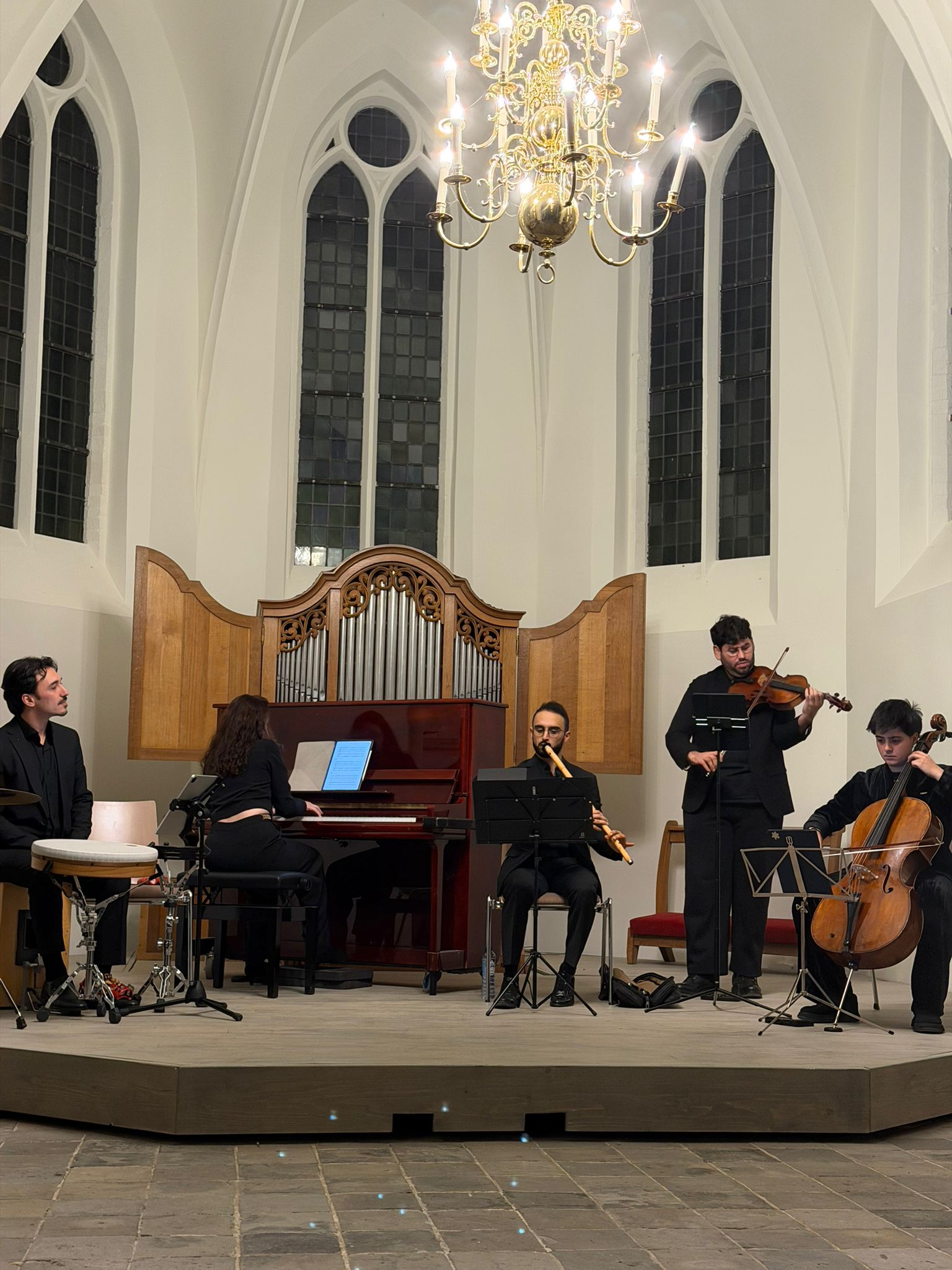
HarmonEast Ensemble performing in a church

Current project

Echoes of the Court

A musical dialogue spanning roughly three and a half centuries of Western European and Ottoman court music. Rather than dissolving the traditions into a single style, the programme lets them answer one another across time.

Music associated with Lully, Purcell and the European fascination with the Ottoman court stands alongside Ottoman marches, makam-based instrumental forms and works connected to figures such as Dede Efendi, Kevser Hanım, Guatelli and Sadi Işılay.

Performed by HarmonEast Ensemble: piano, ney, viola, cello and percussion, with historical context woven into the concert.

The ensemble

HarmonEast

HarmonEast Ensemble brings together Western classical instrumentation and instruments rooted in Ottoman and Eastern traditions. Its work centres on arranged repertoire and historically informed storytelling.

01

The line-up

Piano · Ney · Viola · Cello · Percussion

Five contrasting instrumental voices in a chamber-music setting.

02

The approach

New arrangements and contextual storytelling create a structured dialogue between repertoires rather than blending them into one anonymous style.

03

For presenters

Available for concert halls, festivals, heritage venues and programmes exploring musical exchange.

Request information

Opera project

Mozart’s Die Entführung aus dem Serail

Şükrü performs on ney in BarokOpera Amsterdam’s reimagining of Mozart’s opera, presented in an Ottoman atmosphere.

The production creates a dialogue between Western and Turkish classical music. Mozart’s score is expanded with newly composed Turkish arias and an instrumental palette that includes ney, qanun and Turkish percussion.

Şükrü’s contribution brings the living sound and phrasing of the ney into the opera’s musical world.

In development

A personal story with the ney

A spoken musical performance about the relationship between a musician and an instrument—and the question that eventually follows years of practice: why do I play?

The work combines live ney with stories of learning, work, belonging and artistic direction. Rather than presenting a finished success story, it follows an ongoing search for the place where skill, livelihood, pleasure and meaning meet.